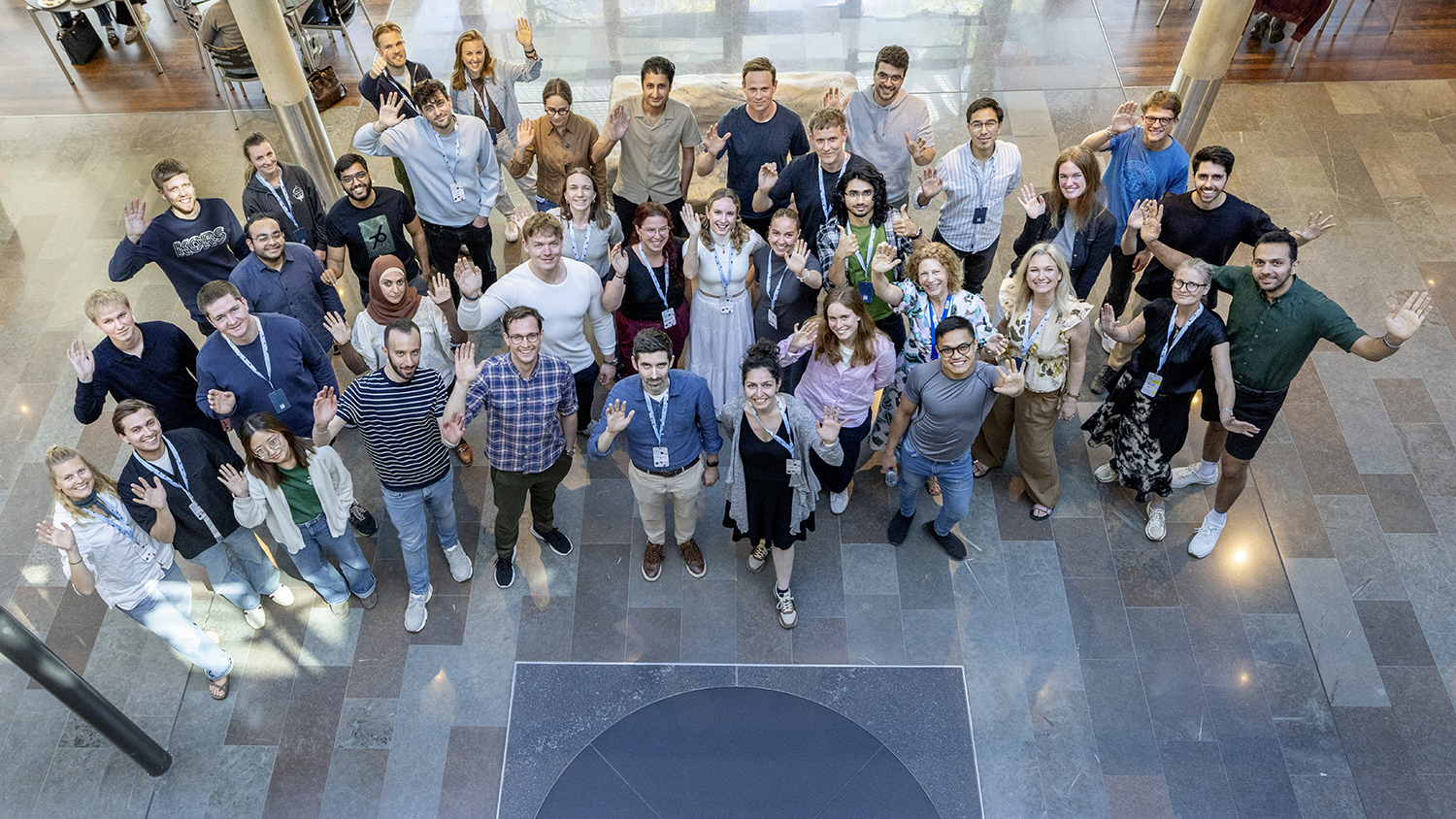
Interest in becoming an entrepreneur is growing among PhD students – at least, if you look at this year’s Young Researcher Entrepreneurship Bootcamp (YREB). A record number (58 participants) signed up.
Held at CBS in the final week of May, the summer school brought together PhD researchers from across Denmark to explore digital entrepreneurship.
Over four intensive days, participants engaged in teamwork, creativity, and idea development, working in interdisciplinary teams to shape and test concepts – many of them based on applications of artificial intelligence.
The programme culminated in final presentations, where participants pitched their ideas and demonstrated how research can be translated into potential business opportunities.
DTU had the largest number of participants, likely to reflect the fact that the initiative originated there and is now well established among students and researchers, with a strong reputation. However, PhD students also joined from Aalborg University, Aarhus University, University of Southern Denmark, IT University of Copenhagen, University of Copenhagen and Copenhagen Business School.
One of the DTU participants was Beatrice Scapolo, who is in the final year of her PhD at DTU Health Tech:
“I really enjoyed the course. Even though I already had some startup experience, it definitely increased my interest in pursuing a career either as a founder or in a startup. I like the energy and commitment in that environment – and the sense that you can really make a difference and see the impact of your work. It was also very inspiring to meet founders working towards their goals.”
A strong focus on practical, hands-on teaching
This was the fifth time YREB has taken place. Since 2022, more than 200 researchers have completed the bootcamp. It is the only entrepreneurship course in Denmark for PhD students with a strong emphasis on practical, hands-on teaching.
The aim is both to inspire young researchers to consider entrepreneurship as a potential career path and to equip them with concrete tools to test their ideas and assess their commercial potential.
Over the years, YREB has developed into a collaborative platform across all eight Danish universities, strengthening entrepreneurial capacity, interdisciplinary collaboration, and entrepreneurial mindsets.
The need for interdisciplinarity
Participants came from a wide range of fields, including computer science, business administration, law, and medicine.
“The diversity of participants created a very dynamic environment. They were mixed into teams based on both academic background and gender, allowing them to contribute with different competences,” said Special Consultant Susanne Rydahl from DTU Compute’s section of Innovation, who helped establish the summer school and remains a co-organiser.
According to Beatrice Scapolo, this interdisciplinary approach was what made the experience particularly valuable:
“What really stood out was the combination of a strong focus on artificial intelligence and participants from very different backgrounds. It highlighted how important – and challenging – communication is. What seems obvious or exciting to you is not necessarily clear to others. You quickly realise that you need a multidisciplinary team to succeed in a startup.”
Working with participants from business backgrounds was particularly insightful:
“They think differently – less about technical details and more about customers and business models. That friction between perspectives is actually where a lot of learning happens. It also made clear that it’s not just about the technology, but whether the idea works as a business, whether it matters, and whether it can be sold – and how you communicate it. For instance, when dealing with patents, you have to bridge the gap for IP experts; they understand how to protect an invention, but they rely on you to guide them through the unique, hyper-technical details of your idea,” Beatrice Scapolo summarised.
The story continues after the photo gallery.