Ph. D. school on uncertainty in machine learning
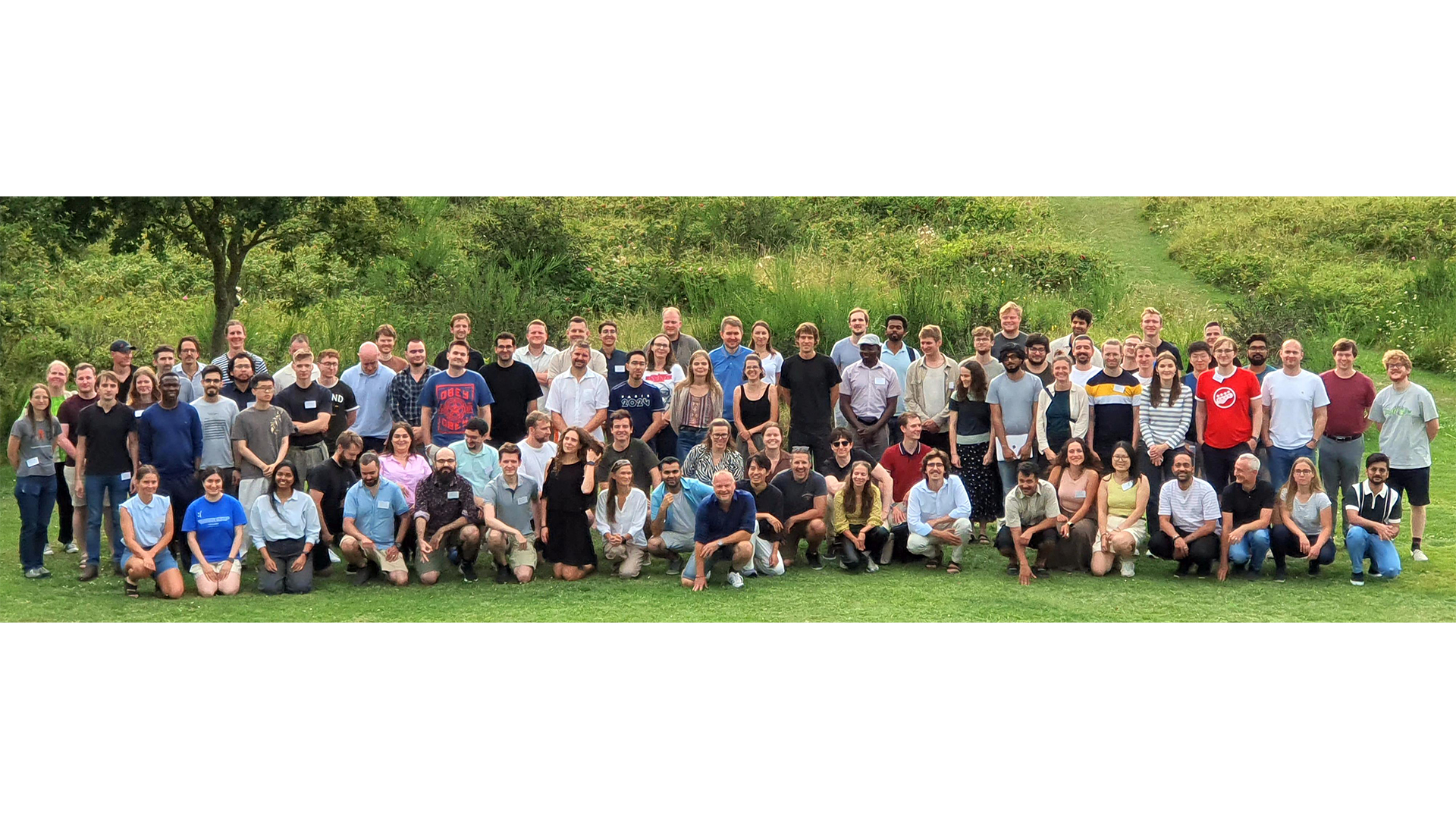
This year's summer school on uncertainty in image analysis is taking place in Denmark and is the sixteenth summer school jointly organised by DIKU, DTU, ITU, and AAU.
Uncertainty is an inherent part of real-world data and decision-making, yet traditional machine learning models often overlook it. In recent years, the field of uncertainty quantification has emerged as a vital area of research, aiming to equip models with the ability not only to make predictions, but also to accurately express how confident they are in those predictions. This is especially important in domains where the cost of errors is high, such as healthcare, autonomous systems, and scientific discovery.
In deep learning, uncertainty can arise from different sources. Some of it is due to noise or ambiguity in the data itself – such as blurry images, missing values, or conflicting labels – while other forms of uncertainty stem from the model’s own limitations, like being exposed to unfamiliar inputs or trained on insufficient data. Understanding and modeling these different types of uncertainty allows machine learning systems to recognize when they might be wrong, to defer decisions when appropriate, and to guide further data collection or human oversight.
This summer school will explore the theoretical foundations and practical applications of uncertainty in machine learning. Participants will learn how uncertainty can be modeled using probabilistic approaches, approximate inference, and ensemble methods, and how these techniques can be integrated into modern deep learning pipelines.
A central part of the summer school experience will be hands-on, collaborative project work. Participants will work in groups on a programming challenge that involves applying uncertainty-aware techniques to a real-world problem. This practical component is designed to foster creativity, critical thinking, and a deeper understanding of how uncertainty can be harnessed to build more reliable and trustworthy machine learning systems.
By the end of the course, participants will have gained both conceptual insight and practical skills that can be applied across a wide range of research domains. Whether working with medical data, environmental models, or complex sensor systems, the ability to reason about uncertainty is becoming an essential part of the modern machine learning toolkit.
Important dates
- Registration and payment: March – June 2026 (Registration is open!)
- Poster submission: August 1, 2026
- Summer school: August 10. – 14., 2026.
Please check the practicalities for your planning. We have also arranged some social events.